How do we preserve what makes Hawaiʻi Hawaiʻi while confronting the very real challenges facing our islands?
The Hawaiʻi Executive Collaborative (HEC) Hawaiʻi Executive Collaborative brought leaders and community members together to explore how Hawaiʻi can preserve its soul while navigating change
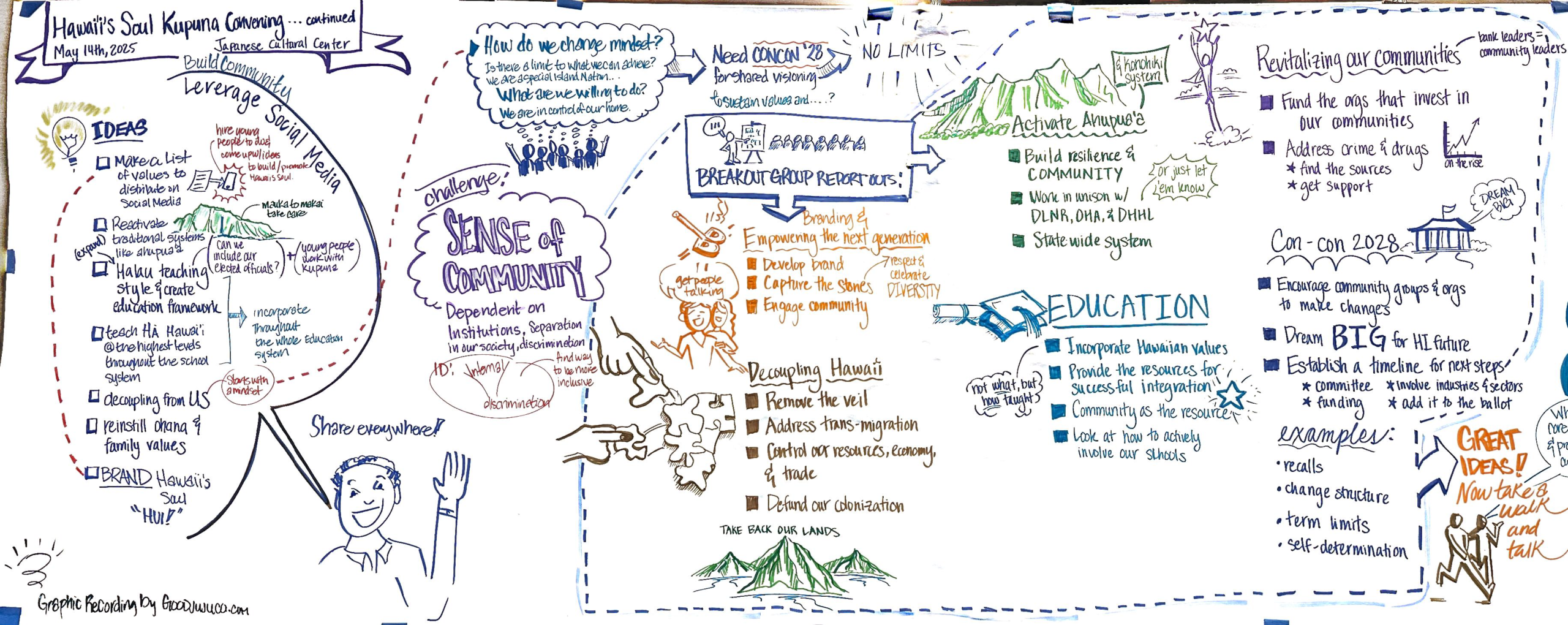
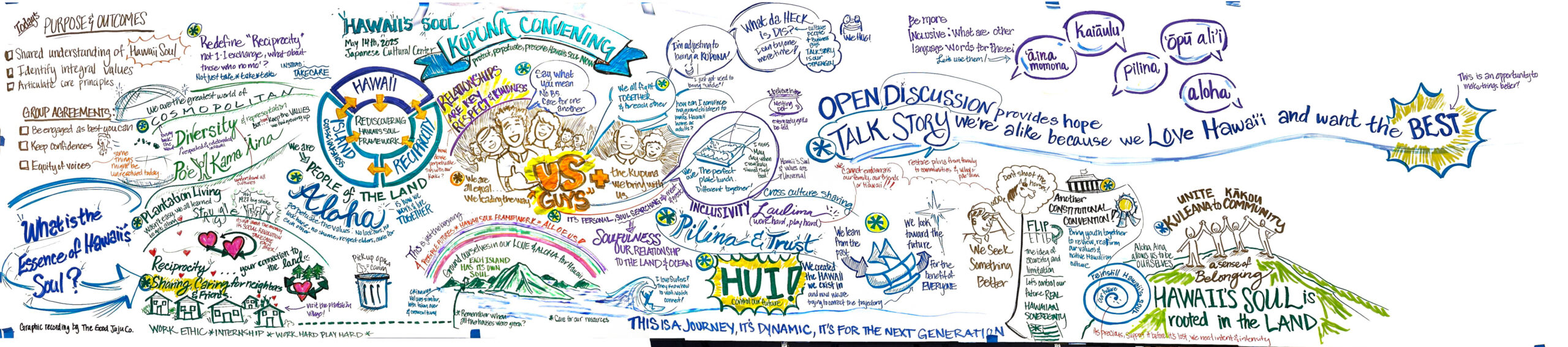
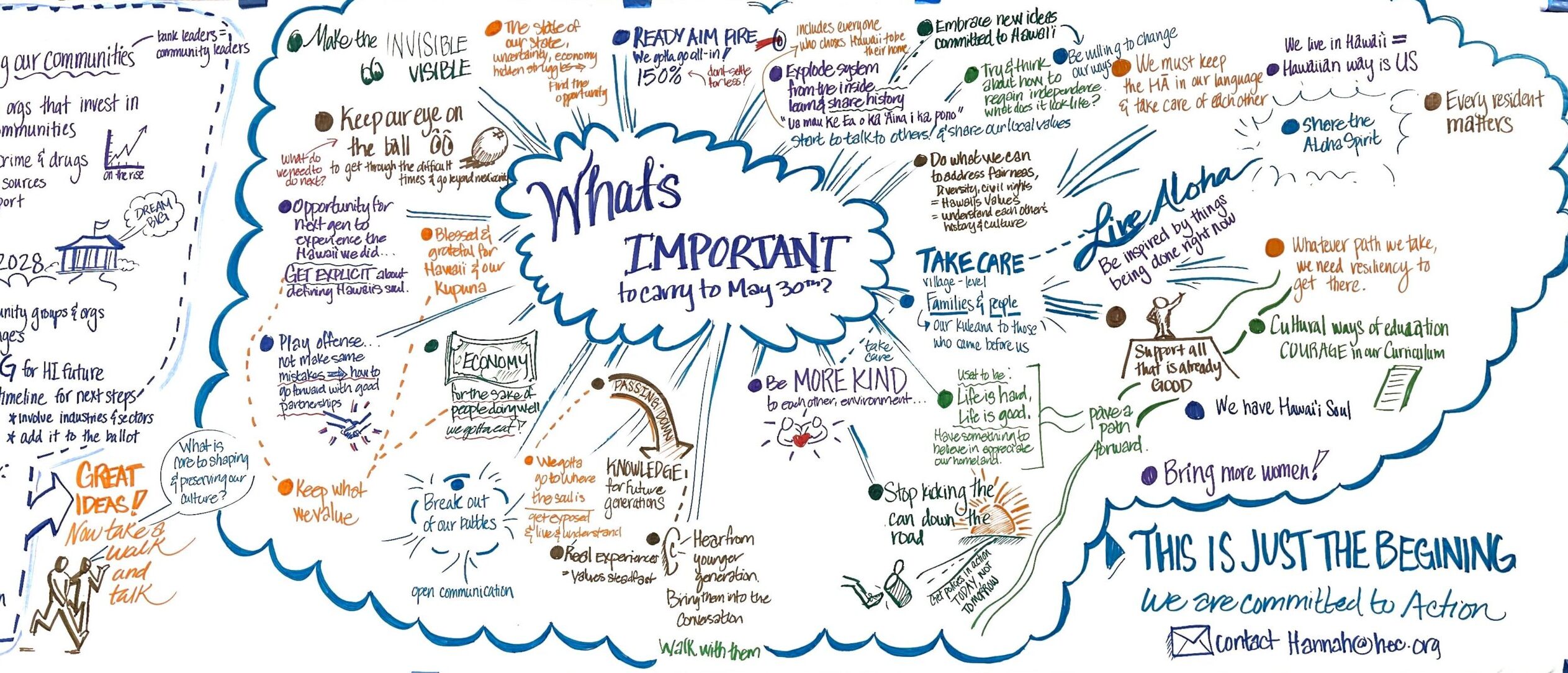
Good Juju joined HEC’s 2025 convenings to listen, synthesize and visually capture the conversations as they happened—turning hours of presentations, stories, questions and dialogue into large-scale graphic recordings participants could see, react to and remember as they moved forward to action.

Hawaiʻi’s Soul isn’t a single issue or initiative. It encompasses the relationship between people and ʻāina, culture and community, leadership and responsibility, economic realities, belonging, and what we pass on to future generations.
HEC’s earlier work described Hawaiʻi’s soul as rooted in aloha, community, abundance and the understanding that the health of culture, community and individuals is inseparable from the health of ʻāina.
The challenge was was finding the patterns, connections, tensions and ideas within complex conversations and making them visible without losing the humanity behind them.
Good Juju provided live graphic recording across a series of Hawaiʻi’s Soul meetings and convenings, capturing key presentations, participant discussions, group share-outs and emerging ideas in real time. The project was specifically designed not only to document key takeaways, but to enhance engagement and validate participant experiences and contributions.
As people talked, the walls became a visual reflection of the conversation. And the bridge between different convening groups.
Ideas about aloha, lōkahi, kuleana, ʻāina, belonging, abundance, stewardship, leadership, housing, education, community, economic opportunity and future generations began to connect. Questions sat alongside possible actions. Different perspectives could coexist on the same wall. And participants could literally see the collective thinking taking shape.
The resulting graphic recordings became more than meeting notes. They created a shared visual memory of the conversation—something participants could point to, revisit, question and build upon during the convenings, and something HEC could carry forward afterward. Final charts were retouched and converted into digital files following the events.
And perhaps most appropriately for a project about Hawaiʻi’s future, the drawings didn’t attempt to reduce the conversation to one tidy answer.
They helped make the whole conversation visible.